
 Pāḷi English Dictionary
 Sutta Search
Saṃyutta Nikāya
5. Mahā-Vagga
46. Bojjhaṅga Saṃyutta
6. Bojj'Aṅga-Sākacca Vagga
Sutta 56
Abhaya Suttaṃ
Abhaya
Knowing and Seeing
The Diversions
and
The Seven Dimensions of Awakening
Translated from the Pāḷi
by
Michael M. Olds
[1][pts][bodh][than] I Hear Tell:
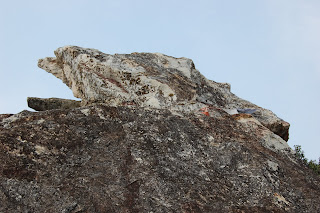
Vulture-head rock.
Once upon a time, The Lucky man,
Rājagaha revisiting,
Vulture's Head Mountain.
There then royal prince Abhaya approached the Lucky Man and
drew near.
Having drawn near the Lucky Man and
greeted him with respectful salutation,
he took a seat to one side.
Knowing and Seeing
Then having taken a seat to one side
royal prince Abhaya
said this to the Lucky Man:
""Pūraṇa Kassapa, bhante, says this:
'There is no force bringing about
nor is there anything that results in[1]
not knowing
not seeing.
There is no force bringing about
nor is there anything that results in
knowing and seeing.'
What does the Lucky Man
have to say about this?"
"There are, royal prince,
forces bringing about
there are things that result in
not knowing
not seeing.
There are forces bringing about,
there are things that result in,
knowing and seeing."
"What then, bhante,
is the force that brings about,
what is the thing that results in
not knowing,
not seeing?"
How does not-knowing
and not-seeing come about through
a driving force,
by being a result of something?
The Diversions
[1] "At which time, royal prince,
one lives with the heart dominated by
passion for sense-pleasures,[2]
overpowered by
passion for sense-pleasures, and
the way that
passion for sense pleasure
arises and
is let go
is not known
not seen,
then that, royal prince,
is a force that brings about,
that is a thing that results in
not knowing
not seeing.
[2] And furthermore, royal prince,
at which time one lives
with the heart dominated by
deviance,[3]
overpowered by
deviance, and
the way that
deviance
arises and
is let go
is not known
not seen,
then that, royal prince,
is a force that brings about,
that is a thing that results in
not knowing
not seeing.
[3] And furthermore, royal prince,
at which time one lives
with the heart dominated by
laziness and inertia,[4]
overpowered by
laziness and inertia, and
the way that
laziness and inertia
arises and
is let go
is not known
not seen,
then that, royal prince,
is a force that brings about,
that is a thing that results in
not knowing
not seeing.
[4] And furthermore, royal prince,
at which time one lives
with the heart dominated by
excitement and worry,[5]
overpowered by
excitement and worry, and
the way that
excitement and worry
arises and
is let go
is not known
not seen,
then that, royal prince,
is a force that brings about,
that is a thing that results in
not knowing
not seeing.
[5] And furthermore, royal prince,
at which time one lives
with the heart dominated by
doubt,[6]
overpowered by
doubt, and
the way that
doubt
arises and
is let go
is not known
not seen,
then that, royal prince,
is a force that brings about,
that is a thing that results in
not knowing
not seeing."
"What name, bhante,
do you give to this Dhamma lesson?"[7]
"I name it
'The Diversions'[8] royal prince."
"For sure, Lucky Man,
they are diversions!
For sure, Well gone,
they are diversions!
If overpowered
by just a single one
of these diversions, bhante
one could not know
could not see;
what then can one say
of these five diversions?!
The Seven Dimensions of Self-Awakening
"What then, bhante,
is the force that brings about,
what is the thing that results in
knowing and seeing?
How does knowing and seeing
come about through
a driving force,
by being a result of something?"
"Here, royal prince, a beggar
[1] develops the dimension of self-awakening
that is minding[9]
seated on solitude,[10]
seated on dispassion,[11]
seated on ending[12]
culminating in letting go.[13]
He, having whole heartedly developed
the minding dimension
of self-awaking,
knows and sees things
as they really are.
This then, royal prince,
is a force that brings about,
a thing that results in
knowing and seeing
[2] develops the dimension of self-awakening
that is Dhamma research,[14]
seated on solitude
seated on dispassion,
seated on ending
culminating in letting go.
He, having whole heartedly developed
the Dhamma research dimension
of self-awaking,
knows and sees things
as they really are.
This then, royal prince,
is a force that brings about,
a thing that results in
knowing and seeing
[3] develops the dimension of self-awakening
that is energy building,[15]
seated on solitude
seated on dispassion,
seated on ending
culminating in letting go.
He, having whole heartedly developed
the energy building dimension
of self-awaking,
knows and sees things
as they really are.
This then, royal prince,
is a force that brings about,
a thing that results in
knowing and seeing
[4] develops the dimension of self-awakening
that is enthusiasm,[16]
seated on solitude
seated on dispassion,
seated on ending
culminating in letting go.
He, having whole heartedly developed
the enthusiasm dimension
of self-awaking,
knows and sees things
as they really are.
This then, royal prince,
is a force that brings about,
a thing that results in
knowing and seeing
[5] develops the dimension of self-awakening
that is impassivity,[17]
seated on solitude
seated on dispassion,
seated on ending
culminating in letting go.
He, having whole heartedly developed
the impassivity dimension
of self-awaking,
knows and sees things
as they really are.
This then, royal prince,
is a force that brings about,
a thing that results in
knowing and seeing
[6] develops the dimension of self-awakening
that is serenity,[18]
seated on solitude
seated on dispassion,
seated on ending
culminating in letting go.
He, having whole heartedly developed
the serenity dimension
of self-awaking,
knows and sees things
as they really are.
This then, royal prince,
is a force that brings about,
a thing that results in
knowing and seeing
[7] develops the dimension of self-awakening
that is detachment,[19]
seated on solitude
seated on dispassion,
seated on ending
culminating in letting go.
He, having whole heartedly developed
the detachment dimension
of self-awaking,
knows and sees things
as they really are.
This then, royal prince,
is a force that brings about,
a thing that results in
knowing and seeing."
"What name, bhante,
do you give to this Dhamma lesson?"
"I name it
'The Dimensions of Self-Awakening'
royal prince."
"For sure, Lucky Man,
they are Dimensions of Self-Awakening!
For sure, Well gone,
they are Dimensions of Self-Awakeningv!
If one were to know
just a single one
of these Dimensions of Self-Awakeningv, bhante
one could know
could see things
as they really are
what then can one say
of these seven Dimensions of Self-Awakeningv?!
And another thing, bhante:
indifferent to me now
is that wearyness of body and
wearyness of heart
I had
from climbing Vulture's Head Mountain,
for I have come to
a complete understanding of
Dhamma."
[1] Hetu. Usually translated 'cause' it is at best "proximate cause" the force that drives the thing into existence. It is the 'giddy-up' of the horseback rider, or the 'hi-ya' and the crack of the whip that drives the horses of a carriage. Paccaya. Consequence, result.
[2] Kāma-rāga. Passionate desire for pleasures of the senses. It should be kept in mind that this includes anything that is perceived through the senses, whether pleasant or unpleasant, high or low.
[3] Vyāpāda. Usually translated "ill will" or "malevolence", I say vya a-pada via the not path; deviance.
[4] Thīna-middha. Woodward: sloth and torpor; Bhikkhu Bodhi: restlessness and remorse; Bhikkhu Thanissaro: sloth and drowsiness.
[5] Uddhacca-kukkucca. Woodward: excitement and flurry; Bhikkhu Bodhi: restlessness and remorse; Bhikkhu Thanissaro: restlessness and anxiety.
[6] Vicikicchā. Doubt as to the meaning of any part of the Dhamma; or doubt as to what is Dhamma and what is not-Dhamma.
[7] Pariyāya. Around-whatsoever-whatsoever.
[8] Nīvaraṇā. (PED has this only under vi-) obstruction, bias, prejudice. They have come to be called 'the hindrances' by most translators. The simile is the blocking of a stream where as I see it a hindrance stops the flow where a diversion changes the direction of the flow but does not stop it. I suggest that these are not hindrances (things that stop one) but diversions (things that lead one astray). But they do stop one's progress along certain lines, in a limited way for a time. I suppose which translation you use will depend on your view of the stream: is it the stream that leads to Nibbāna or is it the stream of worldly pursuits? Both occur in the suttas.
[9] Sati- Sati has all the meanings we give to "mind", but two are dominant: The ability to remember what was done and said long ago, and paying attention to what one is about at all times and in all ways and in that paying attention seeing how things originate, how they pass away, how they are not self and rising above them, being detached and without the ordinary worldly lust and depression. sambojjh'aṅgaṃ. what you want to do is to set this up in your mind like this:
Sati / Mind |
||
| Dhamma-vicaya / Dhamma Research | Passaddhi / Indifference | |
| Viriya / Energy Building | Samādhi / Serenity | |
| Pīti / Appreciation | Upekkhā / Detachment | |
Sati rules which of the two columns you make the focus of your meditation. Both are progressions and the whole is a progression. First you investigate Dhamma, then you generate the energy needed to put what you have learned into practice. The result is some degree of appreciation. Switching to the other side you learn first not to react, but, if needed, to respond and that what you need to do that is impassivity. Being impassive and not reacting but only responding you are on top of the situation. Not content with being on top of things which change and because of that require constant monitoring and is dependent on having something to be on top of; you go to the final step: detachment. Sati guides the process. If you get bogged down by any of the three in the left-hand column, sati tells you to move to the right-hand column; if you get too worked up by any of the three in the right-hand column sati tells you to move your attention to the left.
For a sutta dealing with the organization of The Seven Dimensions of Self Awakening this way see the Vīṇ'opama Suttaṃ
This is how to set up The Seven Dimensions of Self-awakening. What you need to do in your Dhamma-Vicaya is to investigate the details of each of the dimensions.
Hint: you use the forces of The Seven Dimensions of Self-awakening to get rid of the Diversions and the result is knowing and seeing.
[10] Viveka- Whether secluded or not it means not being disturbed (not having one's meditation interrupted) by the activities of others. nissitaṃ depending on, attained by way of, supported by.
[11] Virāga-nissitaṃ. Un-lust. un-passion.
[12] Nirodha-nissitaṃ. Not just the fact that things do come to an end, but the being ready in the heart for the ending of everything.
[13] Vossagga- Giving up, letting go, not-doing. pariṇāmiṃ. The end game.
[14] Dhamma-Vicaya. Researching the Dhamma. For a group of suttas relating to The Seven Dimensions of Self-Awakening, see the Bojjhanga Saṃyutta.
[15] Viriya. Vigour, energy, effort, exertion. It the having of these states, but initially requires the knowledge of how to arrive at them. The basic method suggested in the suttas is to expend energy to build energy.
[16] Pīti. This is a spectrum of terms that covers mild appreciation to extatic joy. Which you observe depends on the degree of freedom you have reached.
[17] Passaddhi. PED has calmness, tranquillity, repose, serenity, but it is the thing that gives rise to these states: not reacting to events that occur to one but responding as required. It could be both the required impassivity and the calm response.
[18] Samādhi. A wide-ranging term understood in several differing ways by the translators. It is officially defined as the possession of the four Jḥānas, being concentrated, being empty of, without signs or aims indicating lust, hate, and stupidity. The word itself means sama = even (level), adhi = over, which I hear as being above it all, or on top of things, and transloate as "serenity."
[19] Upekkhā. Usually translated "equanimity" I prefer "detachment" with the idea "Which would you rather have if you were trapped in a huge pile of dukkha: equanimity in it or detachment from it? But here is the dictionary definition and you can make up your own mind.
